are basic economy fares worth it
Basic Economy Fares
October 9, 2026 · 5 min read
Quick answer
Verdict up front: the effect is real but small, and it's dwarfed by the levers you actually control — dates, route choice, and booking inside the window. Details and numbers below.
The claim: "are basic economy fares worth it." Let's test it against how airline pricing actually works in 2026.
Where the myth came from
Airline revenue management changed. A generation ago fares were filed into rigid weekly-updated tiers — genuine patterns existed: Saturday-night stay rules, Tuesday filings. Today:
- Fares run dynamic — demand algorithms recompute them in real time
- Per flight, pricing teams manage hundreds of price points
- Hours, not weeks, are the competitive clock
Tricks built on a weekly filing cadence are probing a defunct system.
What the data actually shows
- Weekday booking effects are small. Single-digit-percent averages — noise versus where on the curve you buy.
- The fare curve is what counts: 1–3 months domestic / 2–6 international, plus dodging the final-weeks premium zone.
- Route rivalry outguns every calendar trick. Two carriers fighting on your route: 20–40% saved. A "magic booking day" saves you ~2%.
The grain of truth
- Airlines genuinely do file sales early week — deal emails and fare drops therefore cluster statistically on Mondays–Tuesdays. The magic isn't Tuesday; it's being watching the moment sales land.
- Prices vary by point of sale — the country and currency of purchase. Niche, but genuine.
What actually saves money instead
- Date flexibility — worth 15–40% anywhere; no other lever comes close
- The booking window — hit it and the late-booking premium never touches you
- An automated target-price watch — because drops fire at odd hours and die fast
That last one is exactly what AirAlarms does for travelers in the US: set your number once, get pinged the moment your route crosses it. Myths don't save money — watching does.
How to test pricing folklore yourself
Don't take our word for it — or any blog's. One evening is enough to test each claim below:
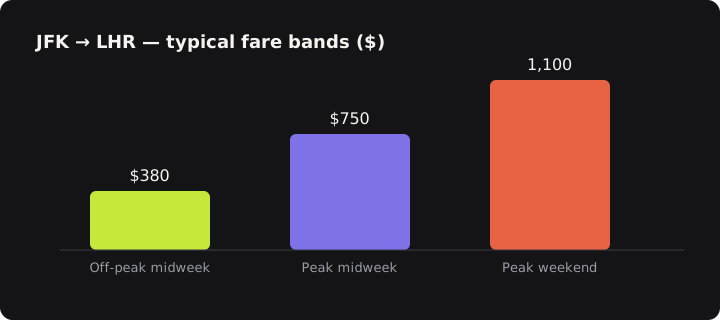
- Pick one route you know well — say New York to London on Delta
- Track one identical flight at the same hour across multiple days — the same one, not substitutes
- Next, compare: private window, phone, VPN exit in another country — write down each outcome
- Next, move the date ±3 days and observe what the price does
Run the test honestly and you get one answer: date shifts beat cookies, browsers and booking days combined. The ±3-day test by itself routinely shows 15–30% movement — the genuine lever, and why [flexible-date watching](incognito mode tested) leads every ranking we've run.
What the myth gets right
Folklore usually starts from something real. Sale emails do bunch early week — filings genuinely skew toward the start of the week. Point-of-sale pricing genuinely differs by country. However, "filed Tuesday" is about inventory machinery, not checkout timing — by publication, the click-day is meaningless. What matters is being [watching when it lands](tactics ranked by real savings).
Basic economy: when the math works
Basic economy isn't a scam — it's an unbundled fare, and whether it's a deal depends on one comparison:
| Your situation | Basic economy verdict |
|---|---|
| Traveling light, no seat preference, no changes | Usually yes — take the discount |
| Need a checked bag | Price it: basic + bag fee often exceeds standard economy |
| Traveling with anyone you want to sit next to | Seat assignment is paywalled — the "free" seat lottery can split groups |
| Any chance of changing plans | Basic fares earn no flexibility; the change fees erase the saving |
| Status holders | Some carriers waive restrictions — check yours |
The trap isn't the fare, it's the comparison shopping: a $180 basic fare next to a $230 standard fare looks like $50 of savings until you add the $35 bag and $15 seat you'd have free in standard. Price the trip you'll actually take — sometimes basic wins, sometimes the "expensive" fare is cheaper.
Local rules and quirks that move prices
- Southwest still includes two checked bags and prices as a bundle, which makes its "expensive" sticker fares cheaper than they look next to LCC totals
- Hub dominance is the hidden variable: out of fortress hubs like Atlanta, Charlotte, Dallas and Salt Lake City, competition is thinner and fares structurally higher than the national average
- Sales cluster around January (post-holiday) and early September, but flash sales fire year-round — the schedule is a tendency, not a rule
The Los Angeles wrinkle
Burbank and Long Beach undercut LAX regularly on domestic routes; the time saved clearing a smaller airport is real. That is Los Angeles adding its own accent to the national numbers — generic advice never captures it; a watched route does.
FAQs
Do flights get cheaper if you book on a Tuesday?
No reliable effect. Sale filings skew early-week, so deal emails bunch then — but what you pay reflects inventory at booking time, not the weekday. Seven days of tracking one flight yields differences in the low single digits.
Does clearing cookies make flights cheaper?
No. Pricing is per-route and inventory-driven, not per-browsing-session. The variable between visits is bucket availability: the cheapest tiers sell out between searches regardless of cookies.
Do airlines quote different prices by device?
By point of sale (country/currency), prices differ — real, though niche. The same fare personalized by device type: never reliably shown — and route competition renders the question moot.
Mistakes that cost readers the most
- Testing myths across different flights. Only the same flight number across times and browsers is a fair test — different flights prove nothing.
- Confusing sell-outs with being watched. "Price rose after my search!" typically means the cheapest tier emptied — no observer required.
- Dismissing all timing. The myths collapse, yet the real lever — where on the curve you book — stands.
Worth knowing
Airline pricing and refund rules shift constantly — we keep an eye on the official sources (the U.S. DOT publishes the rules here) so the advice above stays current.