is skiplagging worth it
Skiplagging: The Savings, the Risks, and What Airlines
October 8, 2026 · 5 min read
Quick answer
Short answer: it depends on the route and the dates — but usually less than the myth claims. This page separates the part that's real from the part that's folklore, with the numbers for the US.
The claim: "is skiplagging worth it." Let's test it against how airline pricing actually works in 2026.
The verdict up front
Most versions of this belief are outdated or wrong — but each myth has a grain of truth worth knowing. Here's the breakdown for the US.
What the data actually shows
- Day-of-week differences are marginal. Averaging a few percent, they are noise beside distance from departure.
- Position on the fare curve decides: 1–3 month domestic and 2–6 month international windows, steering clear of the last-weeks premium.
- Route rivalry outguns every calendar trick. Two carriers fighting on your route: 20–40% saved. A "magic booking day" saves you ~2%.
The grain of truth
- Sales are filed early week by airlines — which is why deal emails and fare drops favor Mondays–Tuesdays in the statistics. The magic isn't Tuesday; it's being watching the moment sales land.
- Where you buy (country/currency) changes prices — niche arbitrage, but real.
What actually saves money instead
- Flexible dates — 15–40% on every route, the biggest lever there is
- The booking window — hit it and the late-booking premium never touches you
- A target price on automated watch — drops land at random hours and disappear quickly
That last one is exactly what AirAlarms does for travelers in the US: set your number once, get pinged the moment your route crosses it. Myths don't save money — watching does.
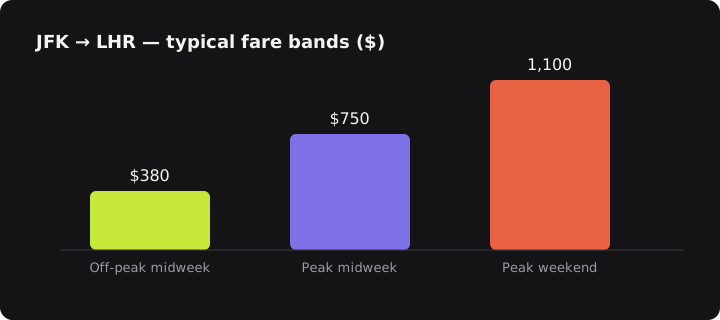
Skiplagging: the mechanics and the actual risk
Skiplagging (booking A→C with a connection at B, then skipping the B→C leg) exploits a real pricing quirk: hub connections are sometimes cheaper than flights to the hub. The savings are real. So are the costs:
| Factor | Reality |
|---|---|
| Legality | Not illegal — it's a contract term, not a crime |
| Airline response | Checked bags go to C; can't skiplag with checked luggage |
| Loyalty accounts | Carriers can (and do) close accounts and void return legs |
| Return bookings | Skip the outbound and the airline can cancel the rest |
| Frequency | Works once or twice; repeat use gets flagged |
It also only works one-directional: you can't skiplag the last leg of a return without stranding the outbound. The honest framing: it's a real technique with real risks that suits travelers with no bags, no loyalty stakes, and no need to change the booking afterwards — not a lifestyle.
Local rules and quirks that move prices
- Under the DOT's 24-hour rule, airlines must let you cancel free within a day of booking (departures a week or more out) — a right that turns book-then-watch into a legitimate play
- American, Delta and United sell basic economy without seat selection or changes — the honest comparison is that fare versus standard economy
- The LCC tier (Spirit, Frontier, JetBlue, Southwest) sets the market floor — an ULCC entering a route drags Big 3 fares down within days
The New York wrinkle
three airports (JFK, LGA, EWR) price independently — EWR often wins on transatlantic, LGA on domestic, and the spread between them can exceed $100 on the same day. That is New York adding its own accent to the national numbers — generic advice never captures it; a watched route does.
How to test pricing folklore yourself
No need to trust this site — or any article. You can verify every claim on this page in one evening:
- Pick one route you know well — say New York to London on Delta
- Monitor the same flight number at matching times over several days — the same flight, always
- Next, compare: private window, phone, VPN exit in another country — write down each outcome
- Next, move the date ±3 days and observe what the price does
The consistent result of honest testing: date changes outperform cookies, browsers, and booking-day tricks every time. The ±3-day test alone regularly shows 15–30% swings — that's the real lever, and it's why [flexible-date watching](booking windows) tops every tactic ranking we've run.
The part of the myth that survives testing
Folklore usually starts from something real. Sale emails do bunch early week — filings genuinely skew toward the start of the week. Point-of-sale pricing genuinely differs by country. Yet "filed Tuesday" describes inventory systems, not checkout pages — once a sale is live on a consumer site, your click-day changes nothing. What matters is being [watching when it lands](incognito mode tested).
Common questions, straight answers
Are Tuesday bookings actually cheaper?
No reliable effect. Sale filings skew early-week, so deal emails bunch then — but what you pay reflects inventory at booking time, not the weekday. Seven days of tracking one flight yields differences in the low single digits.
Does clearing cookies make flights cheaper?
No. Fares are per-route dynamic inventory — not per-browser theater. Between checks, what moves is fare-bucket availability — cheapest tiers truly do sell out between searches, cookies or not.
Does your device change the price you see?
Prices shift with point of sale (country/currency) — niche, but genuine. No reliable demonstration exists of device-based fare personalization — and route competition dwarfs any such effect regardless.
The mistakes that quietly cost money
- Running folklore tests on different flights. A fair comparison needs the same flight at different times/browsers; switching flights invalidates it.
- Reading sell-outs as surveillance. "It went up after I looked!" is normally the cheapest tier selling out — something that happens whether or not anyone is watching.
- Abandoning timing completely. Folklore dies, but its underlying lever (position on the fare curve) remains very real.
Worth knowing
Airline pricing and refund rules shift constantly — we keep an eye on the official sources (the U.S. DOT publishes the rules here) so the advice above stays current.