cheap first class flights usa
Cheap First Class: How US Travelers Fly Up Front for Less
October 2, 2026 · 4 min read
Quick answer
Business class at 50–70% off is achievable via sale windows and fare drops; premium economy at 60–80% above economy is the everyday sweet spot. The mechanism that catches both: target watching.
Neither luck nor points churning explains consistent front-cabin flying. The skill is knowing where premium fares structurally fall — and watching when they do. A realistic guide for the US.
The math that changes everything
A business class return that's normally $4,000–6,000 appearing at $1,800 in a sale isn't a discount — it's a different purchase. The regulars up front aren't wealthier — they're watching when buckets open.
Set your premium target on AirAlarms once. A business fare crossing your line — scheduled or random Tuesday — triggers the ping, and you book within minutes.
What doesn't work
- "Student/consolidator" sites touting 90% off — largely bait
- Expecting check-in upgrades on long-haul — 11 hours later, still economy
- Points strategies minus the points — for most people the cash-sale path wins on speed
Realistic expectations
Business class at 50–70% off: genuinely achievable with watching. First class at economy prices: rare, but it happens — usually on new routes or repositioning quirks. The only way to be in the room when it does is to be watching 24/7.
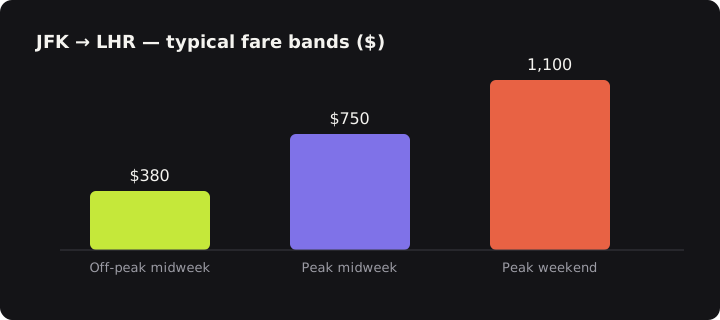
What premium comfort actually costs per hour
Judge premium fares by the flight-hour, not the ticket. On a 10-hour long-haul from the US:
| Cabin | Typical fare band | Cost per hour | What you get |
|---|---|---|---|
| Economy | $385–550 | ~$35–45 | A seat |
| Premium economy | ~60–80% above economy | ~$60–75 | Real width, better meal, priority |
| Business (sale) | $1650–2750 | ~$200–350 | Lie-flat, lounge, arrival functional |
Per-hour, premium economy is aviation's cheapest comfort gain — the reason it earns "sweet spot" status. Sale windows matter because the walk-up business row doubles the per-hour figure for an identical seat.
The upgrade-offer playbook
Priced out of a full premium fare? The upgrade secondary market is not out of reach:
- Book flexible economy first, then watch the airline's bid/offer system — offers usually open 2–5 days out
- Early check-in plus a polite ask — gate and desk agents control upgrade stock the airline is motivated to fill
- Watch for fare-class drops — when a sale empties business buckets, upgrade offers get cheaper too; another thing [alerts](booking window guide) catch for you
First class: the three realistic doors
First class at civilian prices comes through exactly three doors:
- Error and flash fares — the famous $67 transatlantic first-class incidents. Rare, dead in hours, and only caught by watching.
- New-route and repositioning pricing — when a carrier launches first class on a route, introductory fares undercut everything; repositioning flights (seasonal aircraft moves) price absurdly.
- Upgrade currencies — bids, miles-plus-cash, and check-in offers. The systematic play: book flexible premium-economy, monitor the airline's own bid portal, bid when the cabin looks empty.
What doesn't work: hoping at check-in on a full flight, paying walk-up fares, or loyalty programs you don't have the currency for. First class is the cabin where watching beats paying by the widest margin — the people up front at 20% of fare are watchers, not spenders.
Local rules and quirks that move prices
- The 24-hour DOT rule obliges carriers to offer free cancellation for a day after booking (on departures 7+ days out) — consumer protection that legitimizes book-first, watch-second
- Big 3 basic economy (American, Delta, United) strips seat selection and changes — that, against a standard economy fare, is the comparison worth making
- Hub dominance is the hidden variable: out of fortress hubs like Atlanta, Charlotte, Dallas and Salt Lake City, competition is thinner and fares structurally higher than the national average
The Los Angeles wrinkle
Burbank and Long Beach undercut LAX regularly on domestic routes; the time saved clearing a smaller airport is real. That is Los Angeles adding its own accent to the national numbers — generic advice never captures it; a watched route does.
Common questions, straight answers
How do you fly business class for the least money?
The January–February and September–October windows cut long-haul business 30–40% — book inside them, and run a target alert on your own route for fare drops. Upgrades-at-check-in and bid systems fill the gaps.
Is premium economy worth the money?
Over 8 hours the answer is usually yes — 60–80% over economy buys width, meals, priority, all at a fraction of business. On short-haul it's rarely worth the premium.
Has business class ever sold at economy prices?
Yes — inside sale windows, on new-route promotions, and through the occasional error fare. They're rare and die fast, which is exactly why [target watching](booking window guide) is the reliable way to be there when it happens.
The mistakes that quietly cost money
- Buying at walk-up rates. An identical seat: full business fare costs 2–3× its sale price. Never buy premium at the last minute.
- Overlooking premium economy. Cabin hierarchy's value-per-hour king — commonly the sensible middle between economy and business.
- Churning cards outside your control. When fees and spend rules outrun award value, points strategies leak money.
Worth knowing
Airline pricing and refund rules shift constantly — we keep an eye on the official sources (IATA publishes the rules here) so the advice above stays current.