cheapest time to fly to europe from us
The Cheapest Time to Fly to Europe from the US
October 13, 2026 · 5 min read
Quick answer
Structurally cheap: late January through March, May, September–October. Structurally dear: June–August and mid-December. A cheap month plus a watched booking window equals bottom-decile pricing.
Not everything, but the biggest destination-independent lever in fare hunting: timing. Here's the calendar that matters for the US.
The structural cheap months
For most routes from the US:
Three troughs repeat every year: January–March (post-holiday crash + first sales), May (the gap between breaks and summer), and September–October (schools back, summer planes still flying — the long-haul sweet spot). Early November rides the last lull before the Thanksgiving/Christmas climb.
The months that always cost more
- June – August: June through August. Peak everything.
- Mid-December – early January: Christmas travel — the highest structural premium of the year in the US.
- spring break travel weeks in the US: concentrated demand, prices climb 2–3 months ahead and rarely retreat.
The two-sided timing trick
When they fly plus when they book: the professional combination.
- Travel in one of the cheap months above
- 1–3 months ahead for domestic; 2–6 for international
- Automated target watching — cheap months still produce drops at random hours, each lasting days
All three together: bottom-decile fares, no fare-app addiction. Step three: the part AirAlarms does for you.
Country-specific notes for the US
- School holidays dominate domestic pricing — travelling outside June through August is systematically cheaper
- Delta, United, American, Southwest, Alaska, JetBlue and Southwest, Spirit, Frontier, Breeze run different sale calendars — watching catches both
- Winter-sun routes (Caribbean, Canary Islands, Southeast Asia) invert the pattern: their peak is your winter
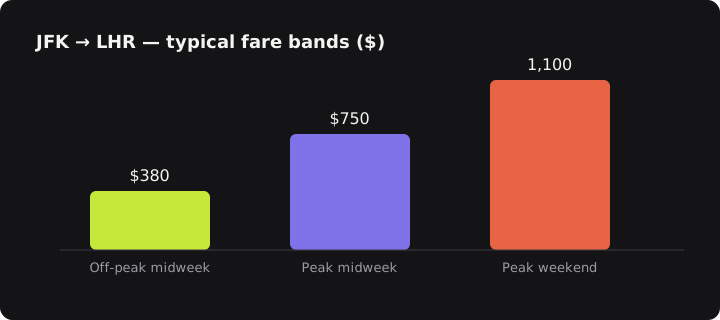
The US fare calendar against the competition calendar
Two calendars stack on the US routes — the demand calendar (when travel is expensive) and the competition calendar (when airlines discount):
| Calendar | Cheap windows | Expensive windows |
|---|---|---|
| Demand | Late Jan–Mar, May, Sep–Oct | Jun–Aug, Christmas stretch |
| Sales | January file, early September file | (sales discount the cheap dates, not the peaks) |
The insight most guides miss: sales fire in expensive-feeling months but discount the cheap ones. A June sale email is selling September travel. So the working combination is: pick the demand-cheap window first, then catch the sale that discounts it — which is precisely what a target-price alert automates across the whole year
The market-specific stuff most guides skip
- Under the DOT's 24-hour rule, airlines must let you cancel free within a day of booking (departures a week or more out) — a right that turns book-then-watch into a legitimate play
- Big 3 basic economy (American, Delta, United) strips seat selection and changes — that, against a standard economy fare, is the comparison worth making
- Refund rights: if an airline cancels or significantly delays a flight and you decline rebooking, you're entitled to a cash refund — not just a credit
The Chicago wrinkle
Midway (MDW) and O'Hare split the market — MDW's LCC-heavy schedule means sale fares appear there first, and ORD matches within days. A city like Chicago bends the whole country's average — one more reason a specific route beats generic advice.
The month-by-month grid for the US
The full calendar, condensed: cheap, expensive, or caution.
| Month | Fare pressure | Why |
|---|---|---|
| January | Cheap (after Christmas) | Post-holiday demand collapse |
| February | Cheap | Lowest load factors of the year |
| March | Cheap → rising | spring break weeks spike prices |
| April | Mixed | Shoulder season, but holiday weeks bite |
| May | Cheap | Pre-summer lull — one of the best long-haul months |
| June | Rising fast | Schools begin to break across the US |
| July | Expensive | June through August peak |
| August | Expensive | Peak continues; book only on sales |
| September | Cheap | Schools back; summer schedules still flying |
| October | Cheap | Often the single best long-haul month |
| November | Cheap → rising | Pre-holiday lull, then the climb starts |
| December | Expensive | Christmas premium, the year's highest |
Three cheap seasons, three expensive ones — and the cheap windows line up almost perfectly with the sale calendars of Delta and Southwest. Pair a cheap month with a watched [booking window](setting a target price) and you're paying bottom-decile fares by default.
The regional wrinkle inside the US
National calendars hide regional ones. School holidays stagger by state and region — the US isn't uniformly on break the same week — which means the "+40% peak premium" hits different cities in different weeks. The underused classic: shift origin or destination a few hundred kilometers, fly the regional airport the week its schools return while the hub still holidays — the peak evaporates. Events run the logic in reverse: one marathon, match, or festival turns a cheap month expensive for a single city on a single weekend. Before blaming the month, check the city.
Frequently asked questions
What is the cheapest month to fly in the US?
Long-haul's cheapest window is usually September–October: school term resumed, summer schedules still operating. Most routes also dip in late January–March and May.
Which month is the most expensive to fly?
Mid-December to early January — the Christmas premium is the year's highest in the US — followed by June–August (June through August).
Do sales happen in expensive months?
Yes — but they discount the shoulder dates around the peak. Watch for sale emails in June targeting September travel, not July itself.
Where travelers get it wrong
- Skipping the holiday itself. Flying on Christmas Day is often the cheapest peak-week move available.
- Mistaking the calendar for the strategy. Cheap months need cheap dates within them — the calendar narrows; it doesn't replace.
- Booking December flights in December. The Christmas premium locks in 2–3 months ahead; last-minute December shopping is the most expensive habit in the US travel.
The official line
Booking rules (cancellation windows, fare-display requirements) are set by regulators; IATA's current guidance is worth a skim before any big purchase.